Machine labor on demandThat means intelligent machines we can call on to do any job, scaled up or down as needed, producing universal basic goods and services for everyone.
Put intelligence and intelligent bodies together, and you get what I’m calling machine labor on demand.
Part 2 Machine labor on demand →Part 1 The answer, in brief
ResourcesLabor and materials are two kinds of resources. When this series talks about sharing resources, here’s the full list I mean:
The resources you pool in a party are then time, access to machines, and reputation, rather than startup cash in the traditional sense.
Part 2 The two markets we live in →Part 5 A flexible floorPart 6 What do we pool?
Universal basic capitalEvery resident holds one equal share of the machines that make their essentials. It can’t be sold, so it can’t pile up in a few hands the way shares do today.
Your share can’t be sold, but it moves with you.
Universal basic capital scored highest of all on agency and on ownership of the gains, and second from the bottom on feasibility, because nothing like it has been tried before.
Part 5 Universal basic capital →Part 7 Where we are nowPart 19 Stage 3: The build-out (about 2030 to 2040)
Universal basic machine laborThat’s the thing I’ve been advocating all along without saying it out loud: machine labor on demand for all. Call it universal basic machine labor.
And everyone should be able to call on it. That’s what I mean by universal basic machine labor: machine labor on demand, for all.
Everyone gets a base: a personal machine of their own, with personal machine intelligence and personal machine labor linked together.
Part 1 The answer, in brief →Part 2 Machine labor on demand
Universal basic goods and servicesFood, water, energy, housing, healthcare, transport and communication: the actual things we need to live, provided from a world of abundance powered by machine labor on demand.
In this world, you don’t need to trade anything for universal basic goods and services.
Part 1 The answer, in brief →Part 6 What do we pool?
The human-will ruleIf a human wants to do it, a human gets to do it.
We can build that very world, so long as everything else is covered by machine labor on demand.
In the world we want, humans are always first in line, and machines fill whatever gap is left.
Part 2 Humans first, machines fill the gap →Part 1 The answer, in briefPart 4 Humans get first pick
The gift-backOnce a community’s infrastructure is up and running, truly up and running, I propose it gets gifted back to the people who live there.
Part 5 The gift-back →Part 19 Stage 4: The gift-back and the floor (about 2035 to 2045)
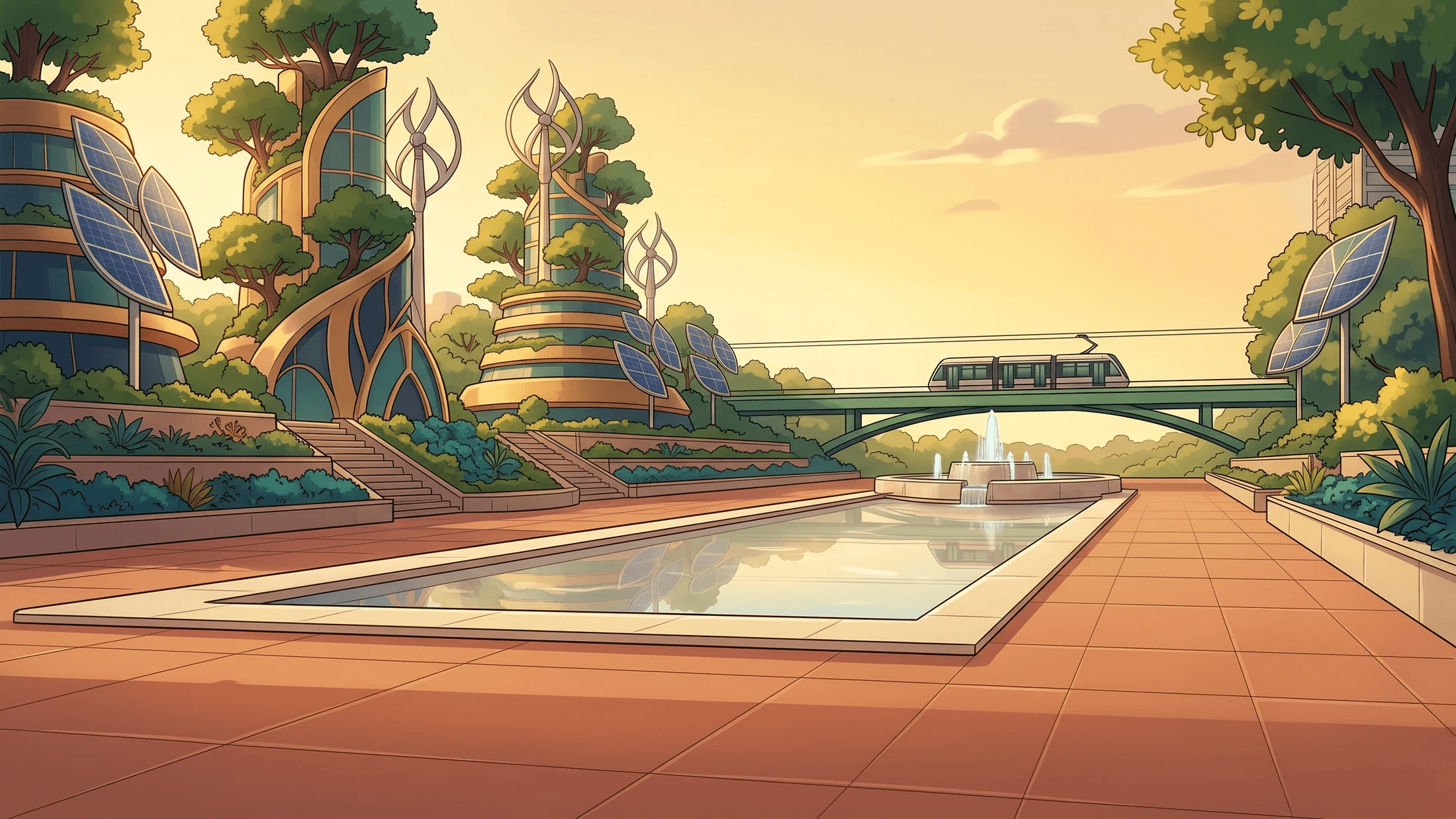
Microgrids for everythingPicture infrastructure that works like a microgrid, but for everything.
Each community runs its own nodes: local machines, local energy, and local computation, producing enough to cover its own basic needs at a surplus.
Part 5 Microgrids for everything →
Node statesA network of resilient communities becomes the main way people organize their lives, connected by trade in information and resource surplus rather than wages.
Part 19 Stage 5: Node states (2040 and beyond) →
Scarcity by natureThere is also scarcity by human nature: beachfront property, original art, the attention of one particular person. No amount of labor fixes the demand for those kinds of things, which is why money, or something like it, will likely still be needed to coordinate demand around those.
Part 3 Why things are scarce →Part 6 What about scarce wants?
Charter obligationWhere corporations face constant pressure to produce profit for their shareholders, a party would have what’s called a charter obligation to complete the quest it’s on.
Part 4 Parties, guilds, and their charters →
The scarcity flywheelBetter materials make better chips, batteries, solar panels, magnets, and robots. Better chips and robots make more and faster labs. More labs find better materials. Each turn of the wheel speeds up the next one
Part 3 Materials science: where the flywheel takes off →
Intelligent bodiesWith the rise of humanoid robots, and the combination of these humanoid robots with machine intelligence, we’ll soon have intelligent bodies (robots) we can call on demand.
Part 2 Machine labor on demand →
The floorThe floor would be the same everywhere, but what sits on top of it is up to each community.
At that point, the safety net isn’t a program funded by taxes. It’s the floor itself.
Part 5 A flexible floor →Part 18 The first sketch, and why it changedPart 19 Stage 4: The gift-back and the floor (about 2035 to 2045)