UBI Won’t Work. Universal Basic Goods Will.
Part 6 of The World We Want: why a check can’t do what the things themselves can, and what money is still for.

The most common answer to AI and jobs is a check: universal basic income, a citizen dividend, universal high income. I understand the appeal.
But as I wrote in Part 1, if everyone gets more money while the supply of housing, healthcare, and food stays the same, prices rise to absorb it. A check only works if there’s enough of the things it buys, and making enough is exactly the problem machine labor should solve.
We’ve already run a small version of this experiment.
In 2020 and 2021, the federal government sent $814 billion in stimulus checks. Most people spent them on essentials, saved them, or paid down debt.
But a visible minority, mostly younger first-time investors, sent theirs straight to brokerages and crypto exchanges, and economists found the checks lifted the prices of the stocks they bought.
Relief checks probably added about 3 points to inflation. Supply shortages did much of the rest.
The bigger flood came from near-zero interest rates and the Fed buying assets, and it lifted the price of everything people already owned. American household net worth rose $36 trillion in two years. Median weekly pay rose about 9%.
Once people’s basic needs are met, extra money doesn’t build anything new. It goes looking for assets to buy.
That’s why I’d rather pool the things than mail the money.
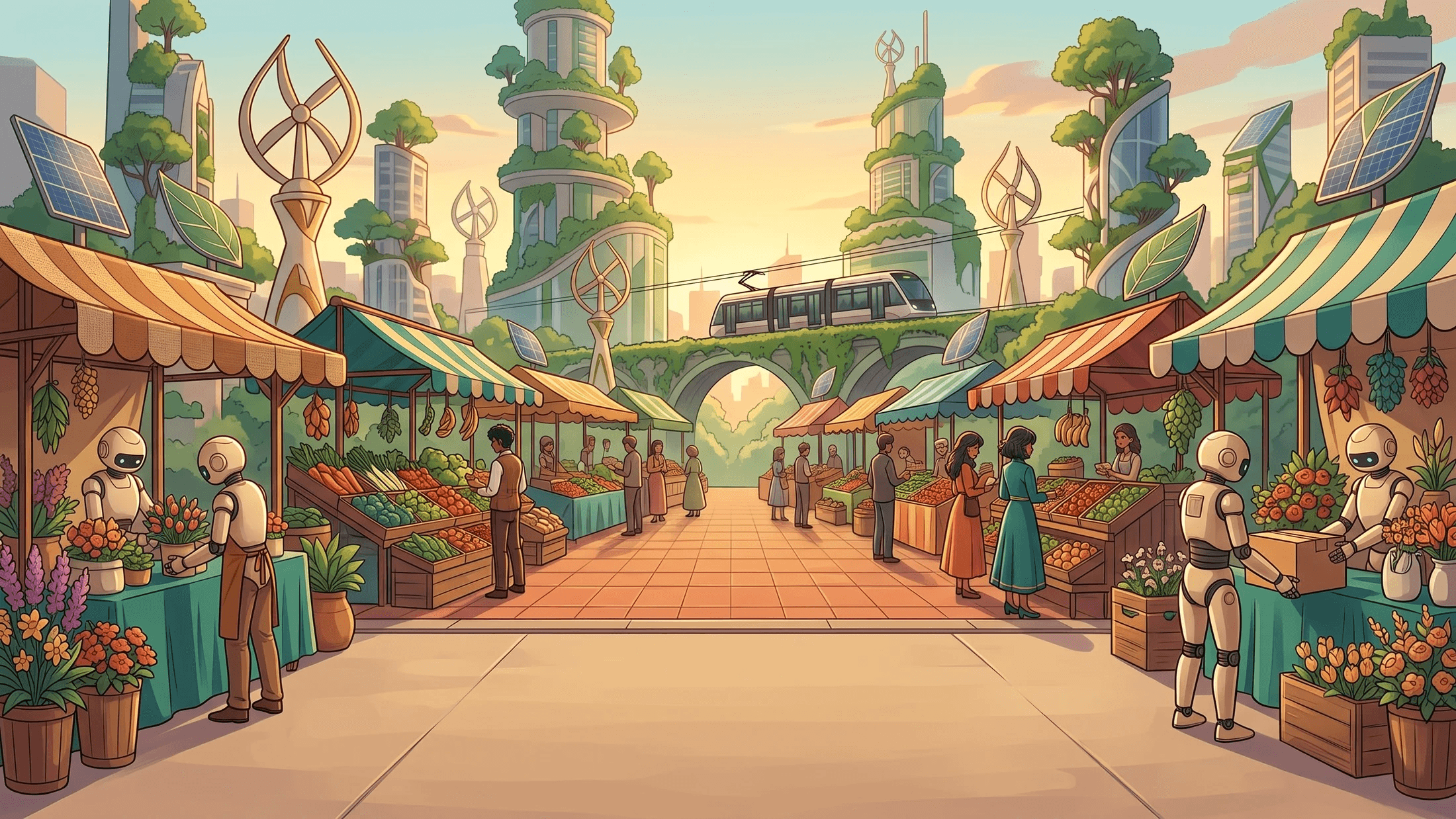
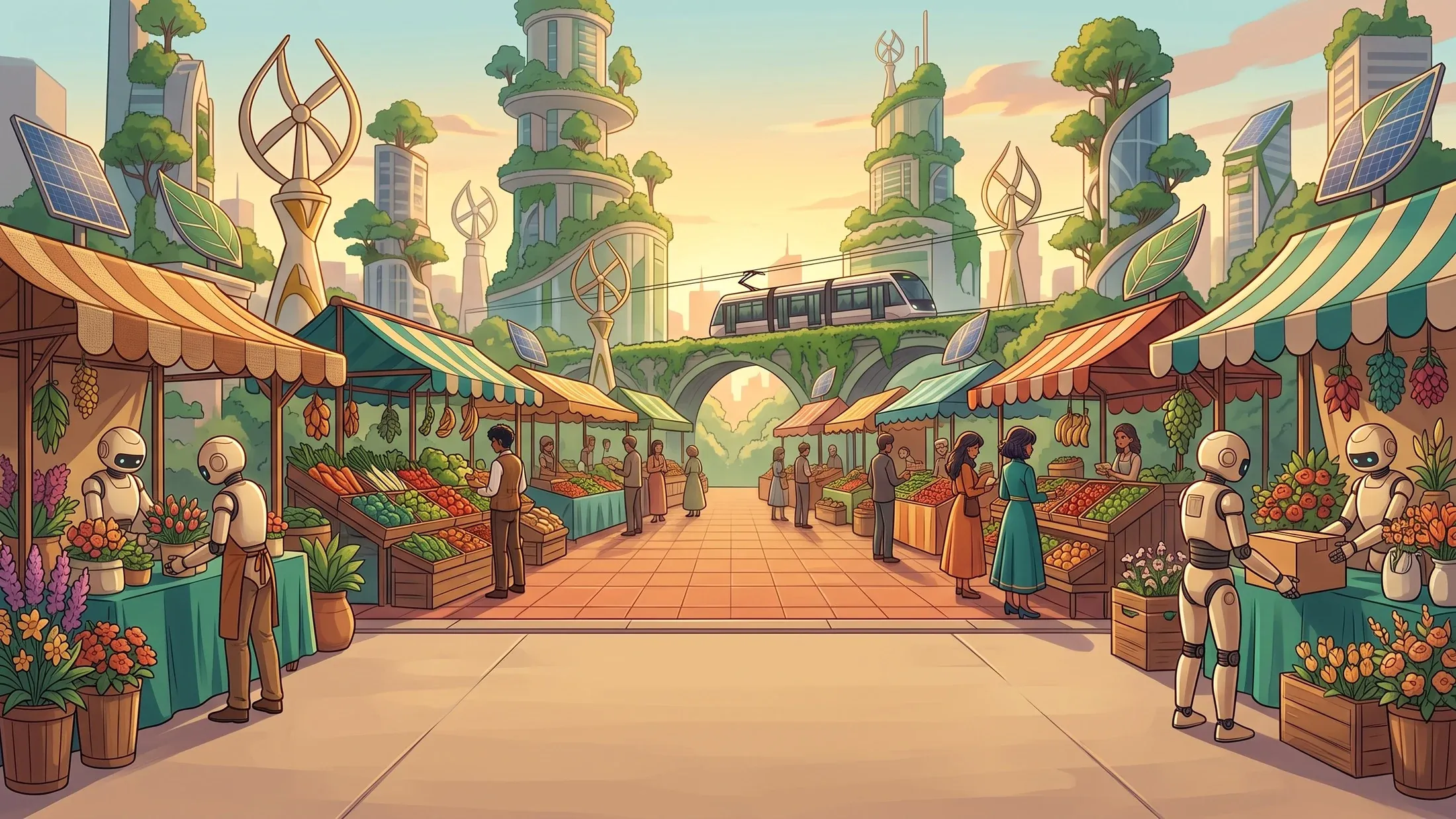
So in this piece, I want to make the case for giving people the things themselves.
It also answers the question Part 5 ended on: if nobody needs a job to survive, what do parties and guilds pool, and what happens to money?
What do we pool?
What about the “startup capital” required to pool your resources?
Without traditional wages from labor like we know it today, what will guilds and parties who invest in quests and trades together use as our primary resource to pool?
How will humans continue to trade with and trust one another if we don’t have “jobs” like we used to?
Right now, we compensate one another with money, which we earn with our time spent performing tasks for others.
If you’re sufficiently wealthy, you trade money for time, doing that trade in reverse.
In this world, you don’t need to trade anything for universal basic goods and services.
That’s what abundance means: a generous first block of essential goods and services is just provided, for free, at all times, for you to use as needed.
Now why would anyone be okay with this trade?
Well, because it’s not my hard-earned time and money that has to pay for it, nor your hard-earned time and money that has to pay for it, so we collectively won’t care that someone else is getting what they need for free, because so are we.
It is simply taken care of because we all pooled our resources to make it so.
Pooled how? Through universal basic capital: every resident owns an equal share of the machines that make the essentials. Those machines pay you first in what they make, not in a check. Any dividend comes later, from what’s left after upkeep.
Google DeepMind’s economists rate ownership above a check on agency, too. Of the eleven policies they rated, universal basic capital scored highest on agency, 76.3 out of 100 against 53.1 for UBI, and they warned that UBI “risks kindling inflationary pressure.”
They scored universal basic services lower still on agency, at 41.9. That’s why this series doesn’t stop at services: it combines services, goods and capital, so the floor isn’t something handed to you. It’s something you own.
This is what a world of abundance looks like. A world of freedom, and a world of safety, because we all have enough of what we need.
Why universal beats selective
If this sounds absurd, or out of reach, consider how people today already accept this idea when the provision is truly universal.
Nobody resents public roads, libraries, or schools the way they resent benefits that only some people receive.
The resentment comes from selective provision of services and aid, which is why this has to be truly universal. That, and the future labor market will make universality necessary.
Today, this feels impossible because we must always require that someone pays for things. I’m not sure that’s the case in a world of true abundance.
Anarres and Paradise
The Dispossessed imagines a moneyless society on Anarres, where people take whatever they need from basic distribution centers.
Now, Anarres is a barren, resource-poor moon, and it holds together through heavy social obligation and conformity because humans do all the work.
Machine labor on demand, on the other hand, could enable the moneyless distribution without that kind of coercion, or that kind of centralization.
Sure, some obligation and conformity in your local community will be required. Your family will have expectations of you, as will your neighbors, as will your parties and guilds.
It’s good to work together, get along, and feel part of something. It’s an innate human need.
But so much trouble and striving comes from a world designed for scarcity. We’ll need a new one designed for abundance.
For a more recent picture of what this looks like, look at Hulu’s Paradise, set in a city-sized underground bunker in Colorado built to survive the end of the world.
Residents walk into the grocery store, take what they need, and walk out, paying with a wristband they wear everywhere.
Everyone seems to live comfortably, including the person stocking the shelves. And on the edge of town, 3D printers and robotic farms make the goods that keep the whole place running.
But watching it, I kept wondering how it actually works. Is there money? Who decides what job each person does, and what happens when they get bored of it?
There’s still an upper crust running things, with the people at the top living in a compound of their own, and no sign that anyone moves between the two.
Is the person stocking shelves stuck in that role for life?
Parties, guilds, and community-owned infrastructure are my answers to some of those questions.
How this version of Paradise works
Here’s how I’d answer each of those questions.
Is there money? For the essentials, no. Your first block of food, water, energy, housing, healthcare, transport and communication is free, made by machines your town owns.
Money can still stick around for easily storing and trading the surplus resources that are created. This would be to coordinate goods and services above these essentials, which I’ll get to below.
I imagine that first “block”, or tier of services, as everything reasonable that’s available today, at today’s level of quality.
The seven essentials I listed above are how these goods and services are sorted: think of essential needs like sanitation as bucketed under water, and education falling under communication.
Imagine this first block as like the “free tier” of services offered to you by digital service providers. The best companies have generous free tiers for the essential product, with paid premium tiers for power users with more specific demands.
Now that’s just the baseline. Machine labor on demand lets us go far beyond it.
This first block of services would also include a personal machine for everyone: your own personal machine intelligence model and personal machine labor, linked in an embodied robot, so your computer is your robot and your robot is your computer.
Who stocks the shelves? Machines do, unless someone wants the job. There are lots of people who find value in creating beautiful displays and organizing physical spaces.
These people might live in your town, or they might not. If they do, then let them do it; if they don’t, then let the machines handle it.
As far as where the goods come from, the town’s production nodes will grow, make and distribute the essentials to the storefronts, and when a shelf runs low, more arrives, from the town’s own machines or from a neighbor with surplus.
Again, I still imagine many diverse storefronts, as local guilds and community members will want to curate their own spaces, with their goods and services.
Instead of competing for the community’s dollars to stay alive, they will compete for the community’s time and attention, trying to make spaces that appeal to each other’s sensibilities and make unique experiences for others.
What’s the wristband for? In Paradise, it pays for what you take, and goes everywhere you go.
In the world we want, the tracking could point the other way: tracking every resource the town has, from grain to kilowatt-hours to spare machine hours.
All of this is measured and visible, so the network knows what’s running low and where to send more. As far as what you take, your personal data stays yours, with maybe some kind of on-device private accounting to track and discourage hoarding.
Who decides what job each person does? You do. If a human wants to do a job, a human gets to do it. You join a party when you want to take on a quest, and a guild when you want to master a craft.
Parties and guilds will coordinate to offer many services and storefronts that you’ll encounter, but so will individual contributors.
If you have a solo vision for some epic project, you should be empowered to do it. But as they say, to go fast, go alone; to go far, go together.
What happens when people get bored? They move on. Quests end, and you pick the next one.
Over a lifetime, you grow a skill tree instead of following a single career, which I lay out in You Won’t Have a Career. You’ll Have a Skill Tree.
Is there an upper crust? Every resident holds an equal share of the machines that make the essentials, and those shares can’t be sold, so nobody can buy up the machines everyone else depends on.
But people are people, and everything you do will still earn or burn reputation with others. And of course, some will naturally lead.
Leading is a role in a party, and the leader’s term ends when the quest does.
Guilds will determine leadership among themselves and their guild members, organized in structures and at intervals that make most sense to them.
As far as regional, state, and federal government goes, I imagine it would work the same way it does now, until people vote for something different.
Is the person stocking shelves stuck for life? Nobody has to stock shelves at all, and anyone who likes the job can switch to something else tomorrow.
I think the whole point behind The World We Want is designing the world around human agency: you should not be stuck stocking shelves if what you really want to do is paint or sing or build things or design rockets.
We are about to have an abundance of machine labor on demand, for the first time in the history of the world. In this world, we won’t need you to do things you don’t want to... we’ll need you doing the things you actually want.
What money is still for
I imagine a future where nobody has to ask whether they can afford the essentials… only what they want to do with their day.
That said, some form of money will likely persist for the remaining scarce things (since there will always be some scarcity), while the basic necessities become free.
I also don’t imagine these necessities to be low quality. I imagine them to be of exceptional quality, because they are produced either by artisan craftsmen from guilds, or from people with opinions and taste who felt it necessary to dedicate a party to creating this particular product or service.
Should this occur, the resources you pool in a party are then time, access to machines, and reputation, rather than startup cash in the traditional sense.
All three are on the list of resources from Part 2: time and attention, machine labor, and reputation, meaning your credibility with your peers and your track record of getting things done.
And because the motivation of doing your own work will be reputational and for the love of the trade (versus monetary), time will be spent creating novel goods and services that actually have meaningful impact, not just features to monetize, and they will be of impeccable quality and value.
As demand for these hand-crafted goods goes up in value, more machine labor can be dedicated to scaling the process.
That’s where the information side of this economy comes in. For the network to send machine labor and materials where they’re needed, it has to see them: every resource digitized in some way, from a town’s grain stores and kilowatt-hours to its spare machine hours.
I picture that as a second ledger running beside money. Money keeps setting prices for whatever stays scarce. The second ledger tracks the real resources underneath, so surplus can move to need without any household having to buy it first.
I work through how that ledger runs in Keep Money, Add a Second Ledger, and the full design is in my whitepaper, The Information Economy.
What about scarce wants?
Not everything can be free. Beachfront land and original art are scarce by nature. This is where money or another similar mechanism may persist for the rest.
We’ve now covered what the world we want looks like: machine labor on demand, scarcity engineered away, communities that own their machines, parties and guilds that organize the work, and the things themselves instead of a check.
The next question is the hardest one: how do we actually get there from here? That’s Part 7: We’re Less Than a Decade From the Next Economic System.
A check vs. the things themselves
A check moves prices. Making things moves people.
Enough for six of twelve. Try a check for everyone, then let supply grow.
A toy market: each household wants one, and the price is what the last buyer can pay, capped by the cost of making one more. With fixed supply a check goes into the price, and a check paid for by taxing the rich changes who gets the essentials, not how many. Where supply can grow, checks work: big cash transfers in Kenya raised local prices only about 0.1%, because local businesses could sell more (Egger et al., Econometrica 2022).

What do we pool?
Pool time, machines and reputation, not cash
the resources you pool in a party are then time, access to machines, and reputation, rather than startup cash in the traditional sense.
Futurespective
The AI industry has had years to tell you what’s in it for you. They failed. Here’s my attempt...
New essays from Futurespective, in your inbox.